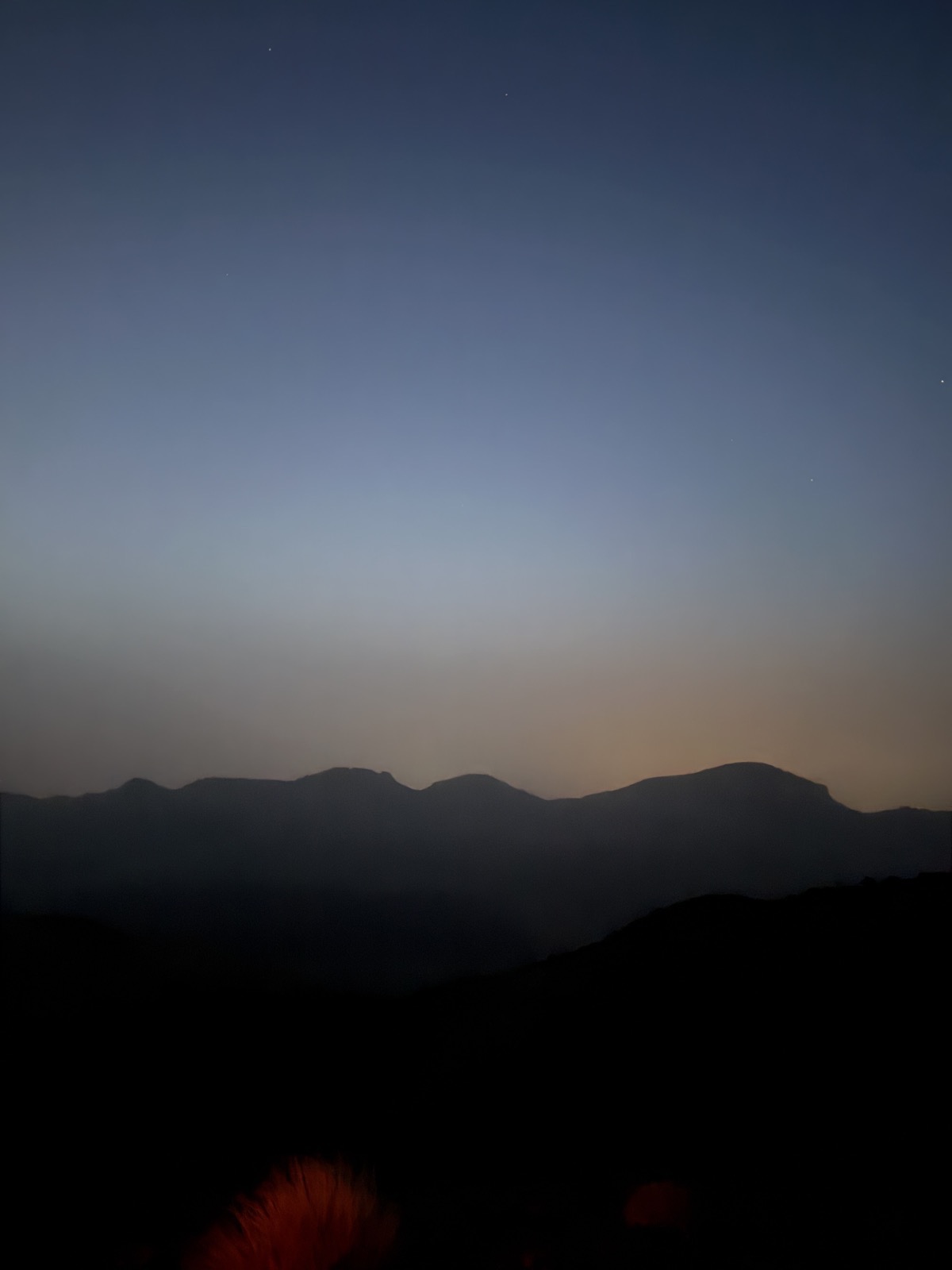
Sunrise and Sunset on Teide: How to Actually See Them
I watched the sun come up from just below Teide’s crater in July 2026, having started walking from the Montaña Blanca lay-by a little after midnight. It was one of the best mornings I’ve had anywhere — and also one of the most bureaucratically fiddly to arrange, because seeing sunrise or sunset from Spain’s highest mountain now involves permits, booking windows and a cable car that shuts hours before the light gets good. This guide covers the four realistic ways to do it, ranked by how memorable they are, with the 2026 rules as they currently stand.
The four ways, compared
| Option | Effort | Rough cost (adult) | Booking needed |
|---|---|---|---|
| Night hike up Montaña Blanca for summit sunrise | Very high — ~1,350 m of ascent in the dark | Trail fees only (€6–25 total for non-residents) | Tenerife ON, released Mondays, 56 days ahead |
| Official sunset cable car (Volcano Teide) | Low | From €72 | volcanoteide.com, sells out in summer |
| Sunset + stargazing coach tour from resorts | Low | Varies by operator | GetYourGuide or the official site |
| DIY sunset/sunrise from roadside viewpoints | Low–medium | Free (car hire aside) | None |
One thing to fix in your head early: on a standard cable car ticket you cannot see either sunrise or sunset from the top. The cable car opens at 9am — one to two hours after sunrise, depending on the season — and the last descent leaves well before sunset in every season. The only ways to be high on the mountain for the light are on foot, on an official sunset departure, or overnighting at the Altavista refuge. Details on all three below.
Option 1: hike through the night for a summit sunrise
This is the one I did, and if you’re fit enough it beats everything else on this list by a distance. You climb Montaña Blanca (trail no. 7) in the dark, arrive at the crater area as the sky starts to colour, and watch the sun rise over a sea of clouds with the shadow of the mountain stretching to the horizon behind you.
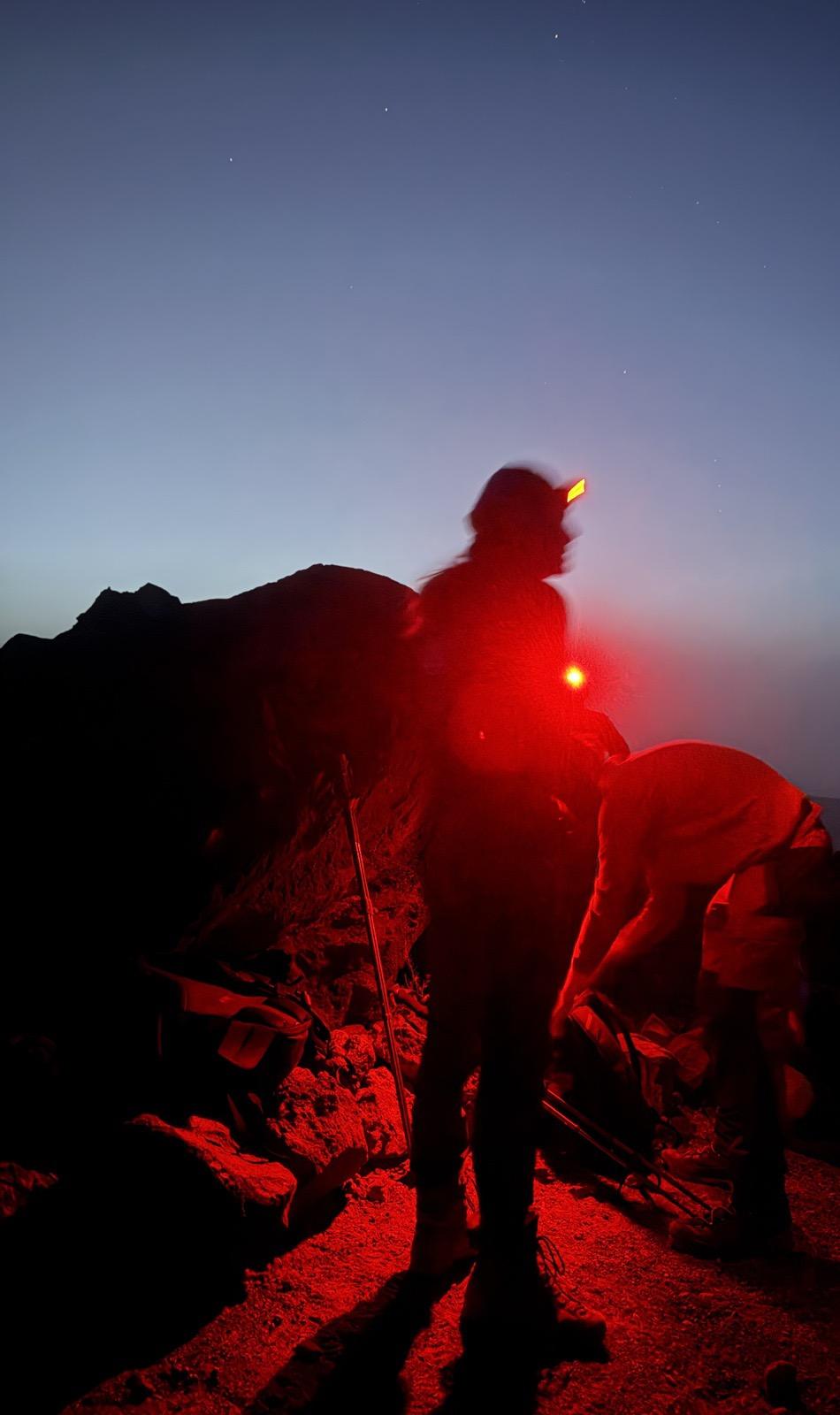 The pre-dawn climb: red lamps preserve night vision, and you’ll want the sky dark anyway — the stargazing on the way up is absurd.
What the climb actually involves
The trail starts from a lay-by at km 40.2 on the TF-21, at roughly 2,350 m. From there it’s about 8.3 km and roughly 1,200 m of climbing to La Rambleta at 3,555 m, then the final 160-odd metres of ascent on the Telesforo Bravo path (trail no. 10) to the crater rim at 3,715 m. The first 4 km are a gentle gravel track; everything after Montaña Blanca itself is steep, loose-ish zigzags at an altitude where most people feel it. Budget 5–6 hours to La Rambleta at a steady night pace.
In July I left the car at about 00:30 for a roughly 07:10 sunrise, which gave time for breaks and slow going above 3,200 m. In winter, with sunrise nearer 07:50, a 01:30–02:00 start works. Do not cut it fine — arriving at La Rambleta twenty minutes before sunrise, still needing the summit path, is how people miss the whole show.
It was cold. Even in mid-July, the hour before dawn at 3,500 m was a couple of degrees above freezing, and the wind made it feel well below. I wore a down jacket, hat and gloves over summer hiking kit and used all of it. In winter you’re dealing with genuinely alpine conditions, sometimes snow and ice.
The permit situation for sunrise (this changed in 2026)
Two separate bookings are now involved, and both moved to the island’s Tenerife ON platform (tenerifeon.es) — no longer reservasparquesnacionales.es:
- Trail no. 7 (Montaña Blanca) itself now requires a booking, with a fee introduced in January 2026: for non-residents it was published at €6 on weekdays and €10 at weekends and holidays (Tenerife residents free, other Canary residents less).
- Trail no. 10 (Telesforo Bravo) — the summit path — has its own permit with a dedicated sunrise window from 6:00 to 9:00am, separate from the four daytime slots that run 9am–5pm. Published fees for non-residents were €15, or €10 if you’re with an authorised guide. Numbers in every window are strictly capped, and sunrise places are far scarcer than daytime ones.
New permit dates are released every Monday at 7:00am Canary time, on a rolling window of about 56 days (doubled from 28 in March 2026), and summer sunrise slots can vanish within minutes. Set an alarm, have an account ready, and book the moment your date appears. Fees and mechanics have been shifting since the system launched, so treat the figures above as a snapshot and check Tenerife ON when you book — the full walkthrough is in our summit permit guide.
If the slots are gone, a guided sunrise or summit tour with the permit included is the standard workaround — operators hold allocations, and it’s the main reason those tours exist. It costs more than DIY, but it turns a 7am website scramble into a solved problem.
Getting back down
You have three options: walk back down Montaña Blanca (hard on the knees but straightforward), take the cable car down once it opens at 9am (a single descent is sold separately, about €23.50 against the ~€42 return — check current prices, and be aware wind can stop it running), or — new for 2026 — build the refuge into your plan.
The Altavista refuge is open again
After standing closed since 2020, the Refugio de Altavista (3,260 m) reopened in summer 2026 under the management of the cable car operator, refurbished with 49 beds. Sleeping there splits the climb: walk up in the afternoon, sleep a few hours, and do the final 450 vertical metres before dawn. It’s the civilised version of what I did. Bookings run through the operator — check volcanoteide.com — and exactly how refuge stays interact with the new sunrise permit windows is one of the details still settling down, so confirm the permit requirement when you reserve rather than assuming.
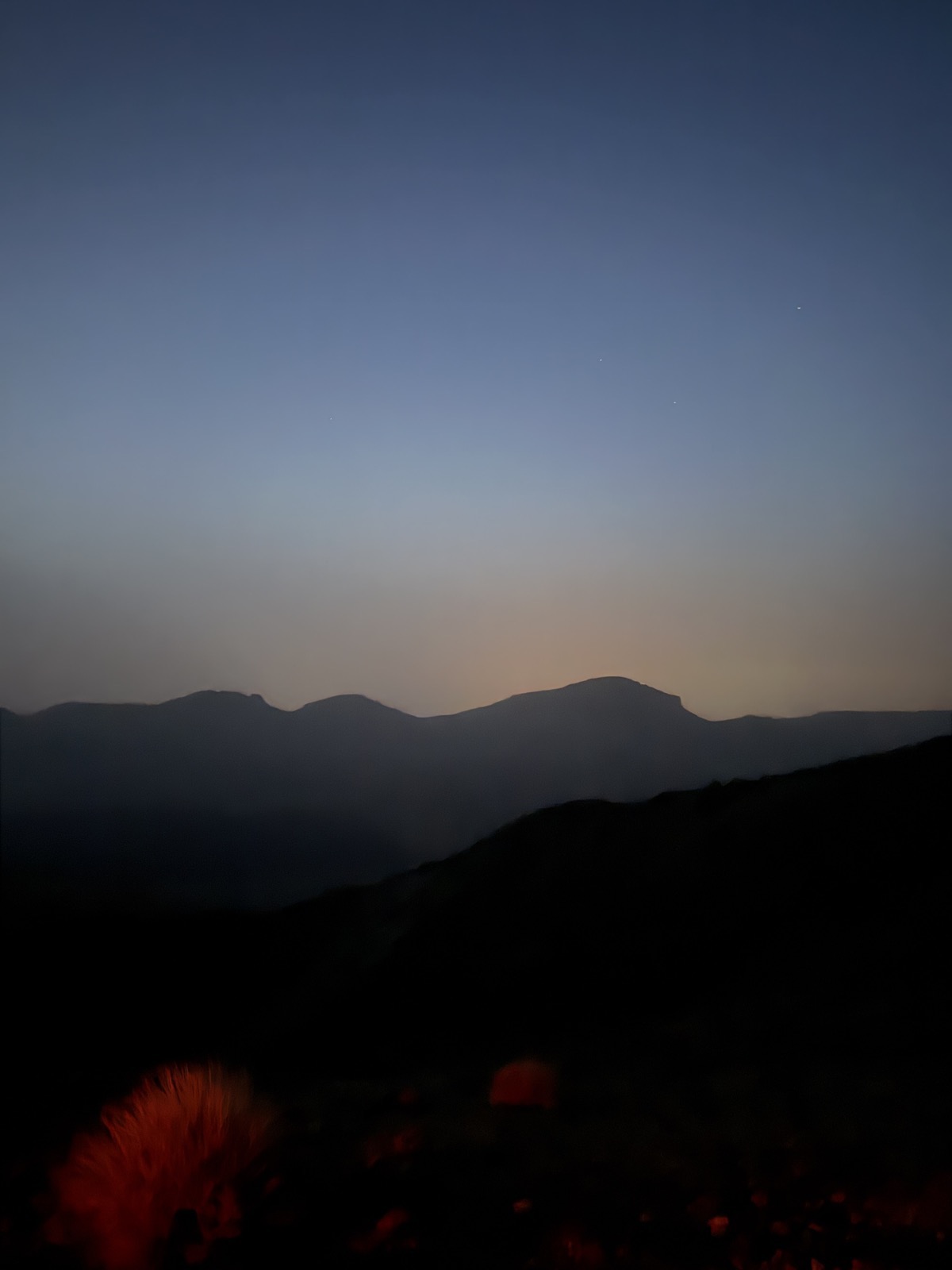 Worth every metre of the climb: the fifteen minutes before sunrise, when the horizon burns and the island below is still asleep.
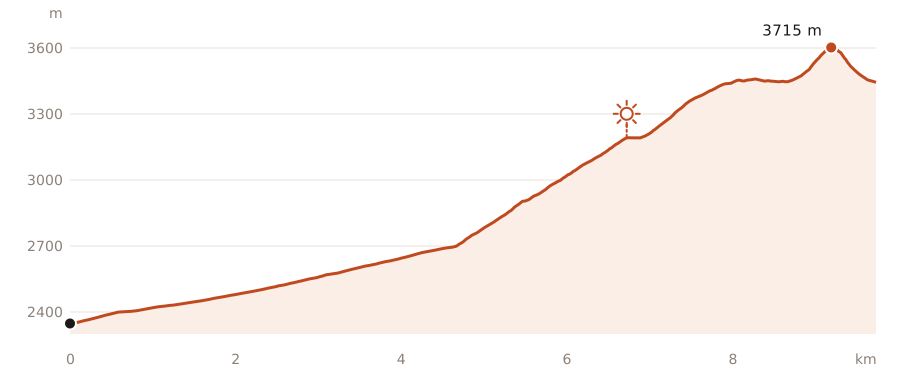 Our recorded night-ascent profile — the sun marks where sunrise caught us, at about 3,200 m with the summit still an hour away.
Planning this hike? Download our GPX track from July 2026 and load it into your navigation app: teide-montana-blanca.gpx.
Option 2: the official sunset cable car
If a night on the mountain isn’t happening, Volcano Teide runs special evening cable car departures after the normal service ends — the only way to be at 3,555 m for sunset without a long walk.
- Cable Car at Sunset — a dedicated evening ascent limited to 90 people, timed to the day’s sunset, with access to the Pico Viejo viewpoint trail. About two hours top to bottom, from €72 per adult, currently offered on Tuesdays, Fridays and Sundays. It does not include the summit crater.
- Sunset & Stars — the same sunset ascent bundled with hotel transport from the north or south, a picnic-style dinner, and roughly an hour of telescope stargazing with Starlight guides back at the base station after dark. Around eight hours door to door, from €182 per adult, same three days a week.
The Pico Viejo viewpoint is the right place for this: it faces west over Pico Viejo’s 800 m-wide crater towards La Gomera, La Palma and El Hierro, so you get the sun sinking into the Atlantic and — behind you — the mountain’s shadow climbing out across the island. These departures sell out well ahead in summer; if the official dates don’t fit, equivalent sunset packages are bookable through GetYourGuide.
Option 3: sunset and stargazing coach tours
Several operators run evening coach trips from the southern resorts and Puerto de la Cruz that combine a caldera sunset with post-dark stargazing at around 2,100–2,400 m — no cable car, no hiking, usually dinner or hot chocolate involved. They don’t take you high on the mountain, but the sunset from the caldera rim is still far above the cloud layer, and Teide National Park’s Starlight-certified skies do the rest once night falls. We’ve covered what separates a good tour from a car park with a laser pointer in the stargazing guide; the current pick of the sunset-and-stars trips is on our tours page.
Option 4: DIY from the roadside — where to point the car
The park has no gates and no closing time. The TF-21, TF-24 and TF-38 stay open around the clock (barring winter snow closures), and national park entry itself is free, so nothing stops you driving up for golden hour. What matters is picking a viewpoint facing the right way.
For sunset, go west. The open western horizon is along the TF-38 towards Chío — the lay-bys and miradors on that road look straight down the sun’s line of descent, often with La Gomera silhouetted in the haze. The Boca Tauce junction (TF-21/TF-38) and the Llano de Ucanca below the Roques de García also work beautifully: the sun drops behind the western caldera wall while the Roques and the face of Teide itself go orange, then pink. This is the Pico Viejo side of the mountain — the same direction the official sunset cable car faces, a thousand metres higher.
For sunrise, go east — to Izaña. The lay-bys along the TF-24 near the Teide Observatory (about 2,390 m) face the rising sun across the ridge, and on most mornings you’re above the Orotava valley’s sea of clouds, which catches fire as the light hits it. It’s a 40–50 minute drive from La Laguna and you can be back for breakfast. (The observatory itself runs daytime guided tours, worth bolting on — see getting to Teide for the road logistics.)
One warning from experience: at these altitudes the temperature drops fast the moment the sun goes. Take a proper jacket even in August, and watch for ice on the road edges from November to April.
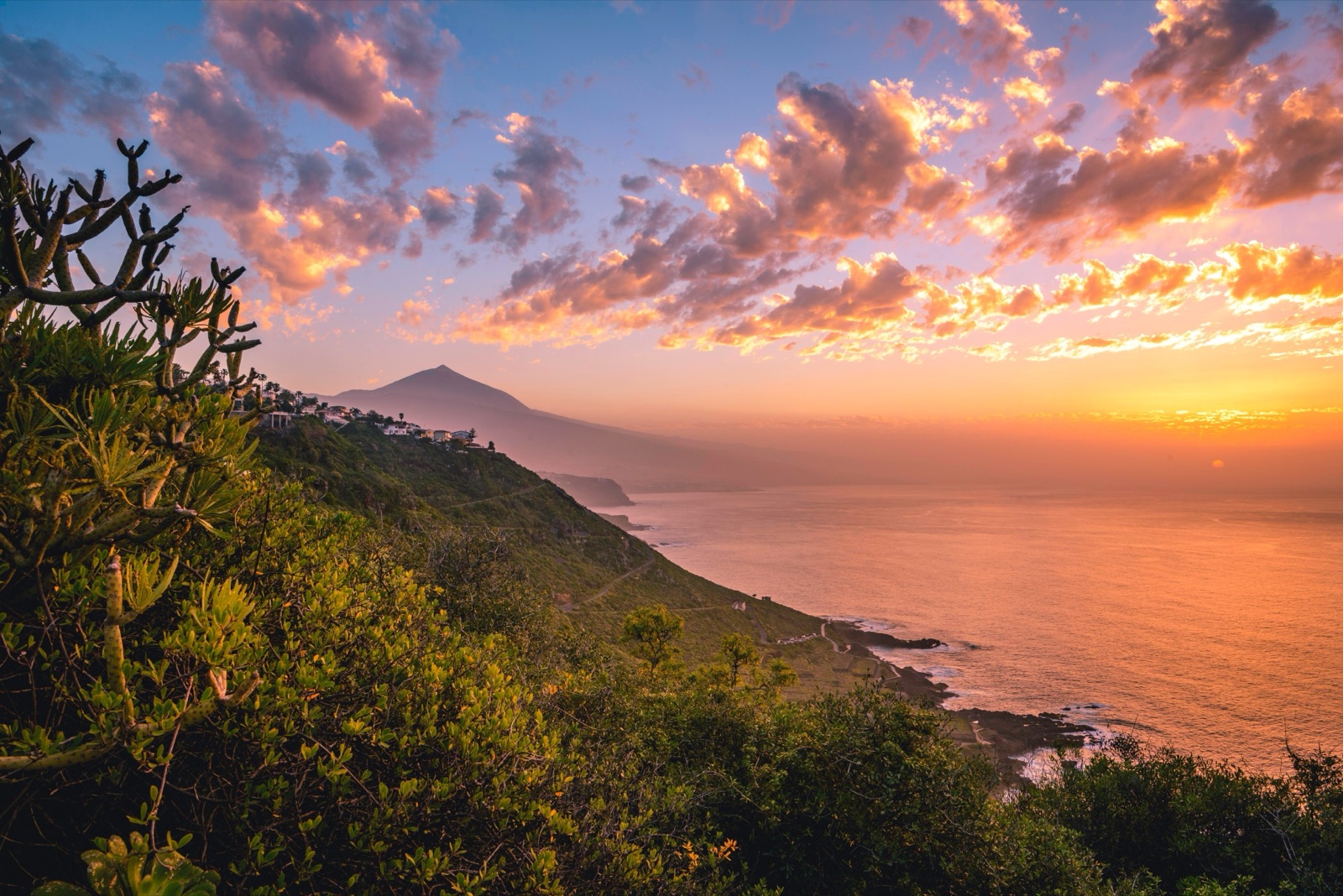 Sunset over the north coast with Teide on the horizon — the roadside option costs nothing but timing.
The shadow of Teide: the world’s largest sea-cast shadow
Twice a day, Teide performs a trick no other mountain can match. Because it rises nearly 4 km straight out of the ocean with nothing around it, its shadow at sunrise and sunset projects onto the sea and the cloud layer for tens of kilometres — far enough to touch La Gomera at dawn and reach towards Gran Canaria at dusk — the largest shadow cast over the sea on Earth. Stranger still, the shadow is a perfect triangle even though the mountain isn’t: a perspective effect, the same reason railway lines converge.
Where to see it:
- At sunrise, the shadow stretches west, out over the sea towards La Gomera. From the summit area it’s behind you as you face the sun — turn around. This was the single most surreal moment of my July climb: a colossal blue pyramid lying on the clouds, shrinking visibly as the sun rose.
- At sunset, it runs east, towards Gran Canaria, and the official sunset cable car trips are timed exactly for it.
- You don’t strictly need altitude — the shadow is visible from the caldera viewpoints too — but the higher you are, the more of it you see. From 3,500 m you get the whole geometry.
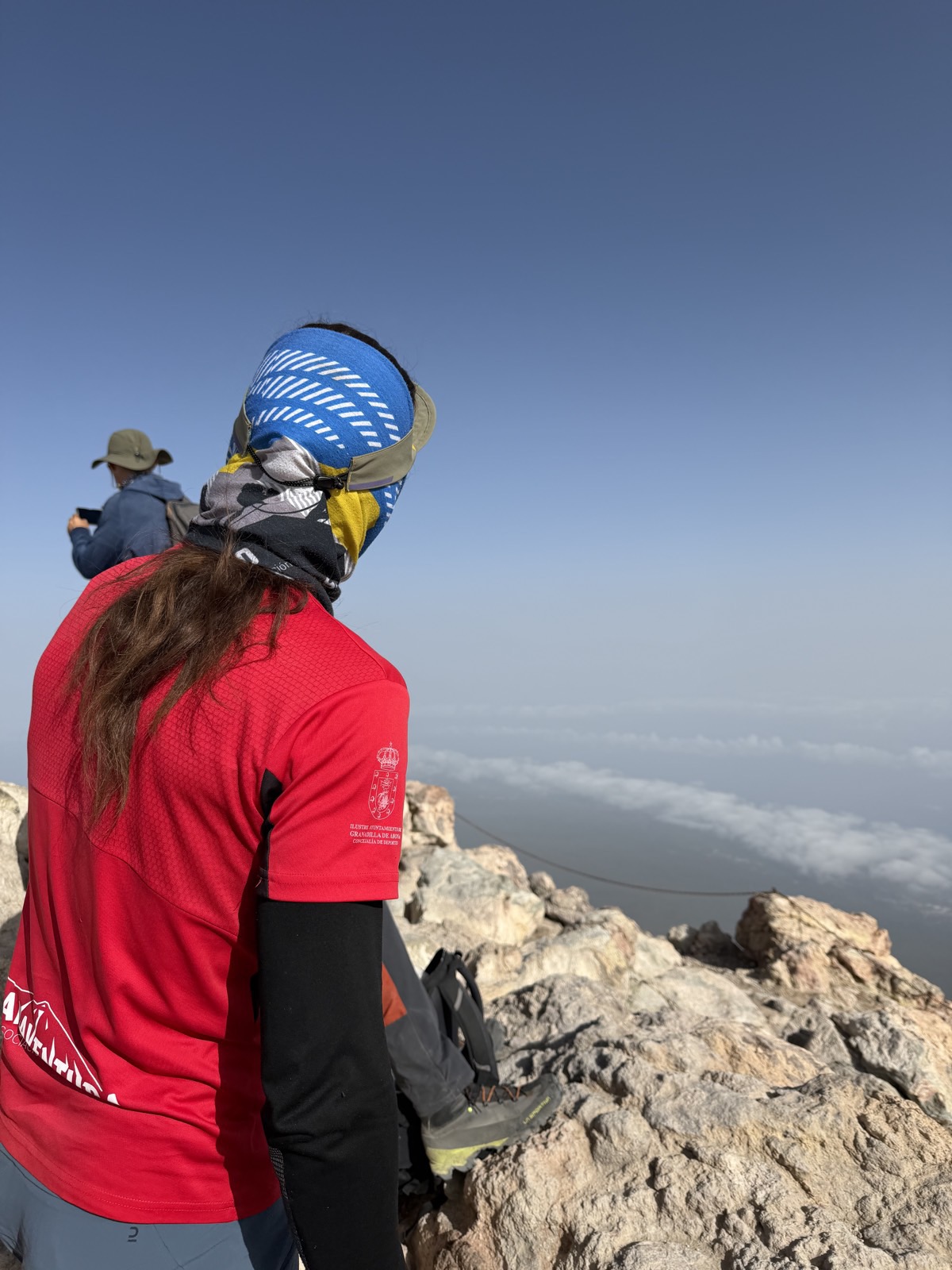 Above the cloud layer just after sunrise. The inversion sits at 1,000–1,500 m most days, which is why the summit gets clear light when the coast is grey.
Practicalities: times, buses and getting caught out
Sunrise and sunset times (Canary time) are later than mainland Europe’s. Rough guide: in midsummer, sunrise around 7:05–7:15am and sunset around 9:00–9:10pm; in midwinter, sunrise around 7:50am and sunset around 6:10pm. Check the day’s exact times when you book anything — the official sunset departures shift their schedule daily for this reason.
The public buses cannot get you there for either event. Titsa runs one bus a day each way: line 342 leaves Costa Adeje at 9:25am and starts back from El Portillo at 3:15pm, passing the cable car stop around 3:25pm; line 348 leaves Puerto de la Cruz at 9:30am and returns from the Parador at 4:00pm. Fine for a daytime visit, useless for dawn or dusk. For sunrise or sunset you need a hire car, a taxi arrangement, or a tour with transport.
The cable car’s normal day ends early. Standard operation starts at 9am year-round; the last descent from the top is around 4:50pm on the winter timetable and around 6:30pm at the height of summer — always well before sunset. Don’t plan a sunset around a standard ticket; it can’t be done. And whatever your plan, check the live status on the morning: wind closes the cable car with little notice, even on cloudless days.
Driving down in the dark is fine — the park roads are well surfaced — but mouflon and rabbits wander onto the tarmac at night, and the drop in temperature can leave damp patches freezing after winter sunsets. Take it gently on the switchbacks below Vilaflor and La Orotava.
Frequently asked questions
Can you watch the sunset from the top of Mount Teide?
Only on one of the official sunset cable car departures (from €72, currently Tuesdays, Fridays and Sundays), or by being on the mountain on foot with the right permissions. The standard cable car’s last descent leaves well before sunset all year round, so an ordinary day ticket cannot be stretched into a sunset visit. The sunset experiences take you to the Pico Viejo viewpoint at 3,555 m, not the summit crater itself.
Do I need a permit to see sunrise from the summit?
Yes — two bookings on the Tenerife ON platform. Since 2026 the Montaña Blanca trail (no. 7) requires its own reservation with a small fee, and the final summit path (no. 10, Telesforo Bravo) has a dedicated 6:00–9:00am sunrise permit window with limited places. Slots are released every Monday at 7:00am Canary time on a rolling 56-day window and go extremely fast in summer. Guided sunrise tours include the permit and are the usual fallback.
How cold is it on Teide at sunrise?
Colder than anyone expects of Tenerife. In July I had temperatures near freezing at 3,500 m in the hour before dawn, with wind chill below that; in winter it is regularly well below zero with snow and ice on the upper trails. Bring an insulated jacket, hat and gloves in any month, and full winter kit from roughly November to April. The coast can be 25°C warmer the same morning.
What is the shadow of Teide and when can I see it?
At sunrise and sunset, Teide casts a shadow tens of kilometres long across the sea and cloud layer — at times reaching neighbouring islands — the largest sea-cast shadow in the world, and perfectly triangular despite the mountain’s uneven profile. At sunrise it points west towards La Gomera; at sunset, east towards Gran Canaria. You can see it from the caldera, but it’s most impressive from high on the mountain, which is precisely what the sunset cable car trips are timed for.
Is the Altavista refuge open in 2026?
Yes. After being closed since 2020, the Refugio de Altavista at 3,260 m reopened in summer 2026 under the cable car operator’s management, with 49 beds. It turns the sunrise climb into a two-stage outing: ascend in the afternoon, sleep, and finish the last 450 vertical metres before dawn. Book through the operator and confirm how your stay interacts with the trail 10 sunrise permit, as the new rules are still bedding in.
Can I get to Teide by bus for sunrise or sunset?
No. Titsa runs a single daily bus each way — the 342 from Costa Adeje (out at 9:25am) and the 348 from Puerto de la Cruz (out at 9:30am), both returning in the afternoon. Neither is anywhere near dawn or dusk. Realistically you need a hire car, a pre-arranged taxi, or a sunset/stargazing tour with hotel pickup, which is how most visitors without a car do it.
Do the park roads close at night?
No — Teide National Park has no gates or entry barriers, park entry is free, and the TF-21, TF-24 and TF-38 stay open 24 hours a day. The only closures are weather-related, when snow or ice shuts sections in winter (the roads over 2,000 m are the first to go). What does close is everything in the park: cafés, the visitor centres, the Parador’s public areas and the cable car, so arrive self-sufficient with fuel, food and warm layers.